


In the realm of drilling operations, the performance of drill bits under high - temperature environments is a crucial factor that can significantly impact the efficiency and cost - effectiveness of projects. As a PDC (Polycrystalline Diamond Compact) drill bit supplier, I have witnessed firsthand the challenges and opportunities presented by high - temperature drilling scenarios. In this blog, we will explore how PDC drill bits perform in high - temperature environments, delving into the underlying mechanisms, advantages, limitations, and strategies to optimize their performance.
Understanding High - Temperature Environments in Drilling
High - temperature environments in drilling can occur in various settings, such as geothermal drilling, deep - well oil and gas exploration, and certain mining operations. Temperatures in these environments can range from 150°C to over 300°C, and sometimes even higher in extreme geothermal applications. These elevated temperatures can have a profound impact on the physical and chemical properties of the drill bit materials, as well as the surrounding rock formations.
Mechanisms Affecting PDC Drill Bit Performance in High - Temperature Environments
Thermal Degradation of Diamond
The diamond layer on PDC drill bits is the key cutting element. At high temperatures, diamond can undergo a phase transformation. Diamond is metastable at high temperatures and pressures, and when the temperature rises, it can start to convert to graphite. This process, known as graphitization, significantly reduces the hardness and wear resistance of the diamond layer. As the diamond graphitizes, the cutting efficiency of the drill bit decreases, and the rate of wear increases rapidly.
Bonding Integrity
PDC drill bits consist of a diamond layer bonded to a tungsten carbide substrate. High temperatures can affect the integrity of this bond. Thermal expansion coefficients of diamond and tungsten carbide are different. When exposed to high temperatures, the difference in expansion can create internal stresses at the interface between the diamond and the substrate. If these stresses exceed the strength of the bond, delamination can occur, leading to the loss of the cutting diamond layer and rendering the drill bit ineffective.
Rock Properties Changes
High - temperature environments can also change the properties of the rock being drilled. Rocks can become more brittle or ductile depending on the temperature and pressure conditions. For example, some rocks may become more ductile at high temperatures, which can make it more difficult for the drill bit to penetrate and can increase the frictional forces between the bit and the rock. This, in turn, generates more heat, exacerbating the thermal issues faced by the drill bit.
Advantages of PDC Drill Bits in High - Temperature Environments
High Initial Penetration Rate
Despite the challenges posed by high temperatures, PDC drill bits offer a high initial penetration rate. Their sharp cutting edges and smooth surfaces allow them to cut through rock more efficiently compared to some other types of drill bits. In the early stages of drilling in a high - temperature environment, PDC drill bits can quickly penetrate the formation, reducing the overall drilling time and cost.
Wear Resistance
PDC drill bits are known for their excellent wear resistance. The diamond layer provides a hard and durable cutting surface that can withstand the abrasive forces of the rock. Even in high - temperature environments, as long as the thermal degradation is managed properly, the PDC drill bit can maintain a relatively long service life compared to traditional drill bits.
Limitations of PDC Drill Bits in High - Temperature Environments
Temperature Sensitivity
As mentioned earlier, the diamond layer of PDC drill bits is highly sensitive to temperature. Once the temperature exceeds a certain threshold (typically around 750 - 800°C for conventional PDC), the graphitization process accelerates, leading to rapid wear and failure of the drill bit. This temperature limitation restricts the use of PDC drill bits in extremely high - temperature environments without proper cooling and thermal management.
Limited Thermal Conductivity
The thermal conductivity of PDC drill bits is relatively low. This means that heat generated during the drilling process can accumulate at the cutting edges, further increasing the temperature and exacerbating the thermal degradation. Without efficient heat dissipation mechanisms, the performance of PDC drill bits in high - temperature environments can be severely compromised.
Strategies to Optimize PDC Drill Bit Performance in High - Temperature Environments
Cooling Systems
One of the most effective ways to improve the performance of PDC drill bits in high - temperature environments is to implement efficient cooling systems. Cooling fluids, such as water - based or oil - based muds, can be circulated through the drill string to remove heat from the drill bit. These fluids not only cool the bit but also lubricate the cutting surfaces, reducing friction and wear. In addition, advanced cooling techniques, such as cryogenic cooling, are being explored for use in extremely high - temperature drilling applications.
Material Improvements
Research and development efforts are focused on improving the high - temperature performance of PDC drill bits through material enhancements. For example, the development of thermally stable PDC materials that can withstand higher temperatures without significant graphitization. These new materials may incorporate additives or use different manufacturing processes to improve their thermal stability.
Design Optimization
The design of PDC drill bits can also be optimized for high - temperature environments. For instance, bits can be designed with larger fluid channels to enhance the cooling effect. Additionally, the shape and arrangement of the cutting elements can be adjusted to reduce frictional heat generation and improve the overall cutting efficiency.
Comparing PDC Drill Bits with Other Drill Bits in High - Temperature Environments
PQ Diamond Core Bit
PQ Diamond Core Bits are often used in core drilling applications. While they also use diamond as the cutting element, their design and application scenarios are different from PDC drill bits. In high - temperature environments, PQ Diamond Core Bits may face similar thermal degradation issues as PDC drill bits. However, their core - drilling function may require different cooling and performance optimization strategies compared to PDC drill bits used in full - face drilling.
PDC Core Drill Bits
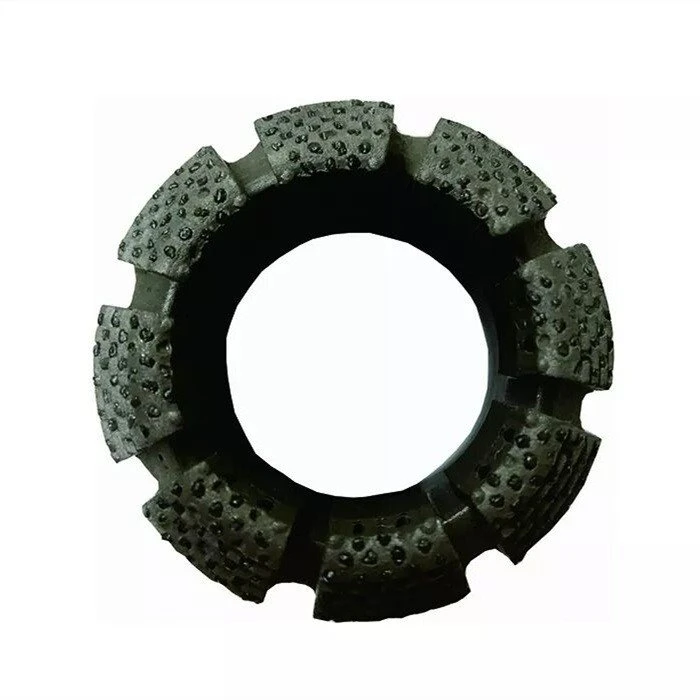
PDC Core Drill Bits are a specialized type of PDC drill bits for core - drilling. They share many of the same characteristics as regular PDC drill bits in terms of high - temperature performance. However, their core - recovery function adds an extra layer of complexity. The high temperatures can affect not only the cutting performance but also the quality of the core sample being retrieved.
Surface Set Diamond Bit
Surface Set Diamond Bits have diamond crystals set on the surface of the bit body. In high - temperature environments, they also face the problem of diamond thermal degradation. However, their diamond distribution and bonding method are different from PDC drill bits. Surface Set Diamond Bits may have a different wear pattern and performance in high - temperature drilling compared to PDC drill bits.
Conclusion
PDC drill bits offer significant advantages in high - temperature drilling environments, such as high initial penetration rates and good wear resistance. However, they also face challenges due to the thermal degradation of diamond, bonding integrity issues, and the changes in rock properties. Through the implementation of cooling systems, material improvements, and design optimizations, the performance of PDC drill bits in high - temperature environments can be greatly enhanced.
If you are involved in high - temperature drilling projects and are looking for high - quality PDC drill bits, we are here to help. Our team of experts can provide you with customized solutions based on your specific drilling requirements. Contact us to start a procurement discussion and find the best PDC drill bit for your project.

References
- Mitchell, R. F. (2006). Fundamentals of Rock Mechanics in Petroleum Engineering. Gulf Professional Publishing.
- Mao, H. K., & Bell, P. M. (Eds.). (1998). High - Pressure Research: Applications in Geophysics and Materials Science. American Geophysical Union.
- Warren, J. E., & Root, P. J. (1963). The Behavior of Naturally Fractured Reservoirs. Society of Petroleum Engineers Journal.