


In the realm of drilling operations, PDC Core Bits stand as a cornerstone technology, offering unparalleled efficiency and precision. As a dedicated PDC Core Bit supplier, I've witnessed firsthand the transformative impact these tools have on various industries. In this blog, we'll delve into the full meaning of PDC Core Bit, exploring its components, applications, and the advantages it brings to the table.
Understanding PDC Core Bit
PDC stands for Polycrystalline Diamond Compact. A PDC Core Bit is a specialized drilling tool designed to extract cylindrical samples, known as cores, from the subsurface. These cores are invaluable for geological research, mineral exploration, and oil and gas reservoir analysis. The bit consists of a steel body and multiple PDC cutters, which are the key to its exceptional performance.
Components of a PDC Core Bit
- Steel Body: The steel body provides the structural support for the bit. It is designed to withstand the high pressures and forces encountered during drilling. The shape and design of the body can vary depending on the specific application and drilling conditions.
- PDC Cutters: These are the cutting elements of the bit. PDC cutters are made by bonding a layer of synthetic diamond crystals to a tungsten carbide substrate. The diamond layer is extremely hard and wear-resistant, allowing the bit to cut through a wide range of rock formations with ease. The arrangement and orientation of the PDC cutters on the bit face are carefully engineered to optimize cutting efficiency and reduce wear.
- Nozzles: Nozzles are located on the bit face to allow the circulation of drilling fluid. The drilling fluid, also known as mud, serves several important functions, including cooling the bit, removing cuttings from the borehole, and providing hydrostatic pressure to prevent formation fluids from entering the wellbore.
How PDC Core Bits Work
When the PDC Core Bit is rotated and pressed against the rock formation, the PDC cutters shear and scrape the rock, creating a cylindrical core. The drilling fluid is pumped down through the drill string and out of the nozzles, carrying the cuttings back to the surface. The core is then retrieved from the bit and analyzed to determine the properties of the subsurface rock.
Applications of PDC Core Bits
PDC Core Bits are used in a wide range of industries, including:
- Geological Exploration: In geological exploration, PDC Core Bits are used to collect core samples from the subsurface to study the rock formations, mineral deposits, and geological history of an area. These samples provide valuable information for mapping, resource assessment, and environmental studies.
- Mining: In the mining industry, PDC Core Bits are used to drill exploration holes to locate and evaluate mineral deposits. The cores obtained from these holes are analyzed to determine the grade and quality of the ore, as well as the geological structure of the deposit. This information is crucial for mine planning and development.
- Oil and Gas Exploration: In the oil and gas industry, PDC Core Bits are used to drill core samples from potential reservoir rocks. These samples are analyzed to determine the porosity, permeability, and fluid saturation of the reservoir, which are important parameters for estimating the potential productivity of the well.
- Construction: In the construction industry, PDC Core Bits are used for foundation drilling, geotechnical investigations, and environmental sampling. The cores obtained from these applications provide information about the soil and rock conditions at the construction site, which is essential for designing safe and stable foundations.
Advantages of PDC Core Bits
Compared to traditional drilling methods and other types of drill bits, PDC Core Bits offer several significant advantages:
- High Penetration Rate: PDC Core Bits can achieve high penetration rates, allowing for faster drilling and reduced drilling time. This is due to the hard and wear-resistant nature of the PDC cutters, which can cut through rock formations more efficiently than other types of cutters.
- Longer Bit Life: PDC Core Bits have a longer bit life compared to other types of drill bits. The PDC cutters are highly resistant to wear, which means that the bit can be used for a longer period of time before it needs to be replaced. This reduces the overall cost of drilling operations.
- Improved Core Quality: PDC Core Bits can produce high-quality cores with minimal damage or deformation. The smooth cutting action of the PDC cutters results in cores that are more representative of the subsurface rock, providing more accurate information for analysis.
- Versatility: PDC Core Bits can be used in a wide range of rock formations, from soft sedimentary rocks to hard igneous and metamorphic rocks. This makes them a versatile tool for various drilling applications.
Our Product Range
As a PDC Core Bit supplier, we offer a comprehensive range of PDC Core Drill Bits to meet the diverse needs of our customers. Our product range includes:
- PDC Core Drill Bits: These are our standard PDC Core Bits, designed for general-purpose drilling in a variety of rock formations. They are available in different sizes and configurations to suit different drilling applications.
- PQ3 Impregnated Diamond Core Bit: This is a specialized PDC Core Bit designed for drilling in hard and abrasive rock formations. The impregnated diamond matrix provides enhanced wear resistance and cutting performance.
- Impregnated Diamond Bit: Our impregnated diamond bits are suitable for drilling in extremely hard and tough rock formations. The diamond particles are evenly distributed throughout the matrix, providing consistent cutting performance and long bit life.
Contact Us for Procurement
If you're in the market for high-quality PDC Core Bits, we'd love to hear from you. Our team of experts can help you select the right bit for your specific application and provide you with detailed technical support and advice. Whether you're a small exploration company or a large mining corporation, we have the products and services to meet your needs.

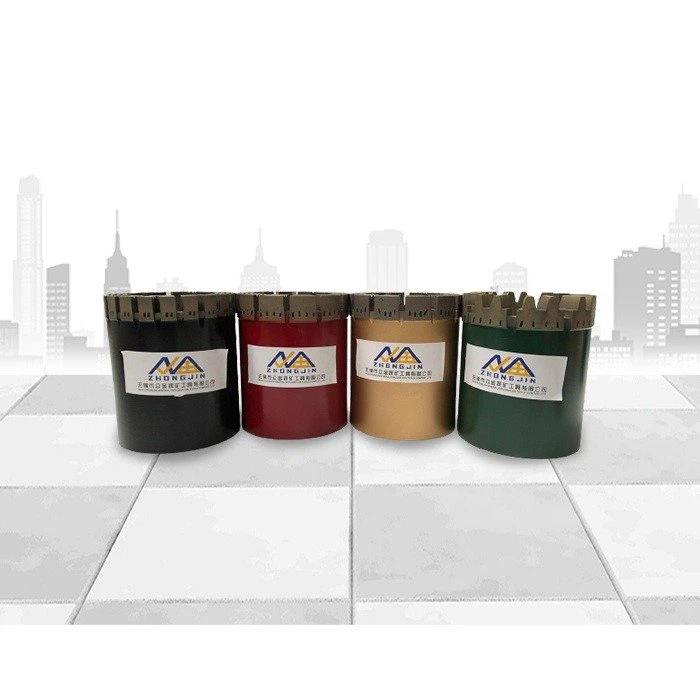
Don't hesitate to reach out to us to discuss your requirements and start a procurement negotiation. We're committed to providing our customers with the best products and services at competitive prices.
References
- Smith, J. (2018). Drilling Engineering Handbook. Elsevier.
- API Recommended Practice 13B-1. (2013). Recommended Practice for Field Testing Water-Based Drilling Fluids. American Petroleum Institute.
- Bourgoyne, A. T., Chenevert, M. E., Millheim, K. K., & Young, F. S. (1986). Applied Drilling Engineering. Society of Petroleum Engineers.