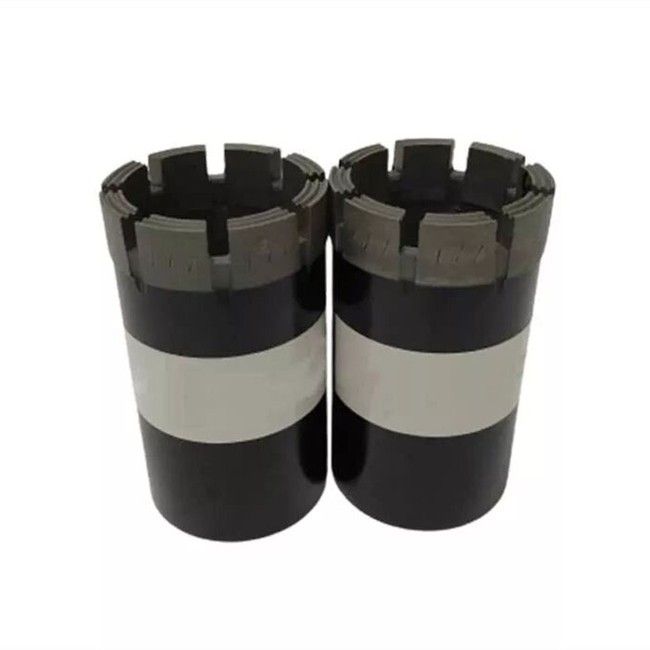
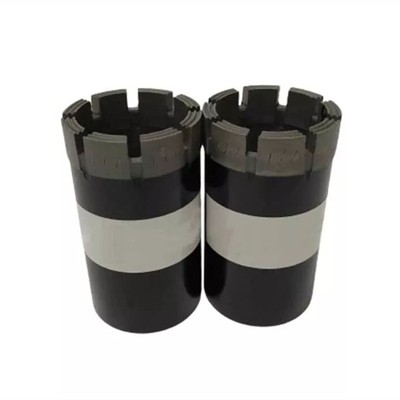
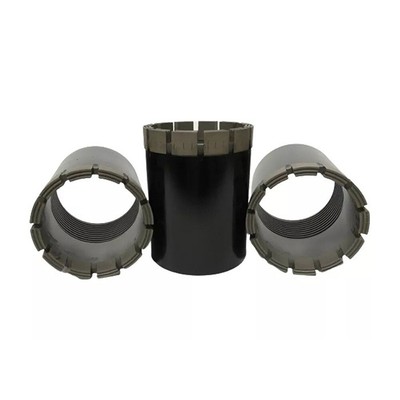
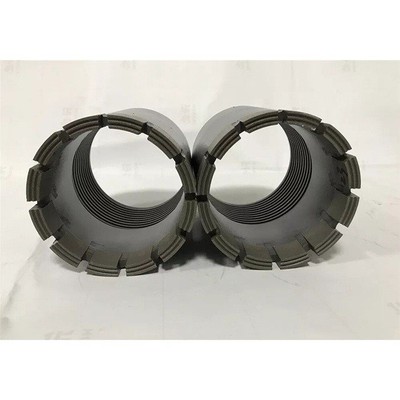
A casing shoes, heavy cylindrical section of steel, filled with cement, which is placed at the end (bottom) of the casing string. It prevents the casing from snagging on irregularities in the borehole as it is lowered. A passage through the center of the shoe allows drilling fluid to pass up into the casing while it is being lowered and allows cement to pass through and circulate behind the casing during cementing operations. Also called the guide shoe. When running casing in deeper wells, a float collar is run in addition to a guide shoe. A tool joint connected to the bottom of a string of casing designed to guide the casing past irregularities in the open hole; usually rounded at the bottom in shape and composed of drillable materials.
Support and guide
The casing shoe is attached to the bottom of the casing string. It provides structural support to the casing and helps guide it as it is lowered into the wellbore.
Sealing
The casing shoe is designed with a special seal or shoe joint that prevents drilling fluids, formation fluids, and debris from entering the casing during the drilling process. This helps maintain well integrity and prevents contamination of the produced fluids.
Protection
The casing shoe protects the bottom of the casing from damage while it is being run into the wellbore. It also prevents the casing from becoming stuck in the wellbore by reducing friction and helping it navigate through challenging formations.
Centralization
Some casing shoes are equipped with centralizers, which are devices that ensure the casing is properly centered in the wellbore. This promotes even cement distribution when the casing is cemented in place, improving well stability.
Custom Service/Accept ODM/OEM service
Strong product development capabilities and advanced fabrication equipment, can be customized according to customer's special requirements.
Competitive Pricing
We offer our services at affordable rates to make them accessible to many clients. Our pricing is transparent and without any hidden costs.
Professional Team
Our company has advanced CNC processing equipment and a team of experienced drilling and construction machinery engineers. The quality of the product is guaranteed and the production efficiency is improved.
Certificate & Honor
Certified according to ISO 9001:2015 and ISO 14001:2015. Many patents are obtained for continuously innovation..
Surface casing: This is the first casing string installed in a well, typically set at relatively shallow depths, and it prevents the collapse of loose or unconsolidated formations near the surface. It also protects freshwater aquifers from contamination.
Intermediate casing: Installed at intermediate depths, this casing string further ensures wellbore stability and helps control pressure in formations encountered during drilling. It may also protect additional reservoirs.
Production casing: Also known as the "production string," this casing is installed to the final target depth and is used to produce hydrocarbons from the reservoir. It provides a conduit for oil and gas to flow to the surface.
Liner casing: In some cases, liner casing is used to extend the casing string to a specific depth without reaching the surface. Liners are used when drilling problems prevent the installation of full-length casing.
Conductor casing: The conductor casing is the largest diameter casing installed and is set at the top of the wellbore. It provides structural support and prevents the hole from caving in during initial drilling.
The Purpose of the Rails of the Casing Shoes
Cementing: Casing shoes play a pivotal role in the cementing process. After the casing is in place, cement is typically pumped down the casing and up the annular space between the casing and the wellbore. The casing shoe's seal ensures that the cement flows down to the desired depth and forms a barrier that isolates different geological formations and prevents fluid migration. Proper cementing is essential for well integrity, zonal isolation, and hydraulic isolation.
Pressure control: Casing shoes are designed to withstand the high pressures encountered at the bottom of the wellbore. This is crucial for maintaining well integrity and preventing any blowouts or uncontrolled fluid releases from the reservoir.
Drilling fluid management: During the drilling process, drilling mud or fluids are circulated through the casing to cool the drill bit and remove cuttings. The casing shoe helps direct these fluids downhole, enhancing the efficiency of the drilling process.
Formation evaluation: In some cases, casing shoes may incorporate features like perforations or sensors that allow for formation evaluation. This means that while drilling continues, data can be collected about the geological formations being encountered, aiding in reservoir characterization and well planning.
Reducing drill bit wear: Casing shoes are often designed with hardened materials or specialized designs to reduce wear and tear on the drill bit as it passes through different rock formations. This prolongs the life of the drilling equipment.


Wellbore stability: Casing shoes help maintain the stability of the wellbore, especially when drilling through soft or unstable formations. By preventing the casing from getting stuck or collapsing, they ensure that the wellbore remains open and allows for the safe and efficient drilling of deeper sections.
Mitigating formation damage: In some cases, drilling through certain formations can cause damage to the surrounding rock. The casing shoe, with its seal and centralisation features, can minimize this damage by providing a barrier between the formation and drilling fluids, reducing the risk of permeability loss and formation impairment.
Well control and emergency situations: Casing shoes are integral to well control procedures. In emergency situations like well kicks or blowouts, the casing shoe can be part of the well control equipment used to regain control of the well by shutting off the flow of fluids from the reservoir.
Facilitating well completions: Once drilling is complete, the casing shoe is a key component for well completions. It serves as a starting point for further operations such as running production tubing, installing packers, and setting other completion equipment.
Enhancing efficiency: Casing shoes are designed to streamline the drilling process. Their various functions, such as guiding the casing, sealing the wellbore, and reducing friction, all contribute to faster and more efficient drilling operations.
Floats serve as well control devices during Running csg in hole. Float shoe is first and float collar is above, as a back up. It is rounded at the bottom so it helps guide the casing string while running in hole. Allows casing fillup and circulation through casing, while RIH. Sometimes auto fill up floats are used which allow fillup automatically but by dropping a ball you turn it into proper floats. During cement job the volume of the shoe track, i.e. volume between float shoe and float collar serve as a buffer volume to pump additional displacement fluid without ending up with a wet shoe, in case you don't bump the plug with the theoretical displacement volume during the cement job. Post cement job the floats serve as a barrier preventing the heavy cement from U-tubing.Sometimes a reaming shoe is run at the bottom, which is used for reaming casing down in tight formations. It can also serve as a barrier for temporary abandonment of the well. After the well has been drilled for a particular section ( say 12.1/4’ ), the well is needed to be cased off to isolate it from from water zone and formation. Accordingly casing of particular size ( here 9.5/8’) is run. But at the very first casing, a casing shoe or casing guide shoe is make up. The main purpose of this shoe is to guide the shoe along the drilled profile, prevent lateral forces on casing bottom and smooth landing. In some shoe, float is there which prevents the backflow of Drilling fluid into the casing string.
Important Casing Accessories Fitted to the Casing String to Improve Cement Quality
Float shoe
A float shoe is a short and rounded shape component with non-return value inside which is installed at the end of the casing. The advantages of a float shoe are as follows;
Prevent mud flowing back while running casing and prevent cement from outside U-tubing back into casing due to unbalanced conditions while performing cementing operation.
Help running casing to the well. The round shape of a float shoe prevents a casing string from hanging up and guiding a string into a wellbore. Some float shoes are made of high strength drillable material and can be used to reciprocate and rotate to pass any obstructions in a wellbore.
Float collar
A float collar is also a non-return valve which normally installed one or three joints above a float shoe. The advantages of a float collar are as listed below;
Prevent mud and cement from U-tubing back into a casing string and float casing if required. This is the same advantage as a float shoe, and this also serves as a backup check valve in the casing string. If the check valve in a float shoe fails, a check valve in a float collar still performs the same purpose.
Land cement wiper plug. Some models of float collars have non rotating profiles. A cement plug landed into the profile will have fewer tendencies to be spun while drilling out. This will minimize time to drill out cementing plug because a cement wiper plug will not be spanned.
Contain contaminated cement. The space between a float shoe and float collar called a “shoe track” will contain any contaminated cement when the top plug wipes any residual mud inside the casing. This will prevent bad cement at a casing shoe and help operators to achieve good formation integrity test (FIT) or leak off test (LOT) of the next well section.
Centralizer
A centralizer is a device to keep a casing string out of the well bore wall. The advantages of casing centralizers are listed below;
Centralize casing string and minimize contact between casing string and wellbore
Achieve proper cement around casing string and reduce cement channelling
Minimize differential sticking and drag while running in hole
Wire Scratcher
A wire scratcher is sometimes installed with casing string to help remove filter cake in the wellbore while a casing string is run in the hole. This will help improve cement bond quality.
Numbers of centralizers and centralizer placement are very important parts to achieve casing running operation and get good cement jobs. Excessive casing jewelleries installed in the casing string can lead to an operational issue while running casing. Therefore, compromising the quantity of installed centralizers and jewelleries is imperative to meet all required objectives.

Casing shoes are used for drilling down or positioning the casing tubes in a borehole.
Casing shoes have cutting elements on the face of the crown and outside diameter, while the inside diameter is smooth. The inner diameter of the casing shoe is sufficiently large to permit free passage of drill bits and core barrels in corresponding sizes.
For installing casing in soil, clay and other soft materials Tungsten Carbide Casing Shoes are the most economical choice. For installing casing into harder materials Diamond Impregnated Casing Shoes are the best choice.
We use only the best quality materials in all our casing shoes. Our grade of Tungsten Carbide has a very high wear resistance and high Transverse Rupture Strength (TRS), meaning that TC inserts are less prone to chipping and fracture.
In Diamond Impregnated Casing Shoes, we use very good quality synthetic diamonds embedded in a hard, abrasive-resistant matrix. The depth of the diamond surface is a generous 9mm, giving a long service life.
Casing Shoes are manufactured in all regular Metric and DCDMA Casing sizes.
Diamond impregnated rod shoes are available for all wireline drill rods, when used as casing.
Casing Strength Properties
For casing design, there are three main loads which have to be considered:
Many scenarios have to be imagined to design the casing in realistic way for risk assessment, integrity and also for costing.
The yield strength
The yield strength is defined as tensile stress which produces the 0.5% elongation per unit length of casing specimen. This value varies according to the steel alloy used to make the casing joint.
Couplings have also their yield strength which can be higher or lower than the main body yield strength. The manufacturer supplies data for both: main body and the coupling.
Collapse strength
It is defined as the maximum external force which crushes the casing. This can happens when the pressure behind the casing is higher than the pressure inside the casing. The external pressure tends to crush the joint of casing inwards.
The collapse pressure can differ according to the situation. Designing for an empty casing, getting fluid influx, or movable salt which can flow toward the casing gives different collapse pressures. For this reason it is important to consider any situation which can be faced during operations.
It is tested that the cementing improves the collapse resistance of casing. Cementing in many cases is important for well integrity. Getting voids between formation and casing can allow for example to salt to move freely toward the casing and collapse it.
Burst strength
The casing can rupture when internal pressure is higher than the external pressure. The resultant pressure tends to deform the joint of casing outwards. The burst pressure is higher if gas comes from high pressurized formation. If the gas is allowed to migrate to surface in a closed well, the pressure will be higher because gas cannot expend and the pressure will not decrease which adds more hydrostatic pressure.
Beside these loadings mentioned above, the casing has also to resist to other types of loadings which have to be considered at designing stage:
The string of casing is fitted with several accessories before running in the hole.
It is used to facilitate running the casing in the hole. It is set at the first run joint of casing. The most common casing shoes are: The guide shoe and the float shoe.
The difference is that the float shoe is fitted with a float valve or non-return valve. This valve allows the fluids the flow outside the casing and it stops them to flow back into the casing while the circulation or pumping is ceased.

Float collar

It is a sub which has the same diameter of the casing. It is placed between the two first joints. It is fitted with a float valve to prevent fluids to flow back into the casing while running. The float collar is also used as seat for cement plugs.
The float collar also prevents cement U-tubing effect before the cement strengthens and hardens in the annulus.
They are placed around the casing joints. They are held in their position by using stop collars. The Centralizers have some advantages.
Remaining the casing in center position in the borehole to allow preforming a successful cementing job.
Minimizing contact area between the casing and borehole wall
But also it has to mention that centralizers can increase the drag which can affect running the casing and generates problems before reaching the bottom of the hole.

Casing hangers and wellheads

The casing string is suspended at the wellhead. It is consisted of a series of spools set one on top of the other. The wellhead has different functions.
The casing is hanged using the casing hanger which sets inside the casing spool. The hangers should be designed to hold the weight of the casing and seal off between the casing hanger and the spool.
Mandrel type: In this case, the hanger is screwed on the top of casing string. When the casing shoe reaches the casing seat depth, the hanger should land on the casing housing. In some cases, pup joints of casing are needed to land the casing hanger at the shoulders into the spool. Using this type of casing can be risky when reaching the bottom of the wellbore is a difficult issue.
Slip type: This type is wrapped around the body of the casing. Setting at the casing spool is performed by lowering the hangers. The suspension is performed by slips machined at inner side of the hangers. These slips set automatically when the casing is lowered. This type is used when the casing cannot reach the bottom and spacing out the string will be difficult.

Q: What are casing shoes?
Q: What materials are casing shoes made from?
Q: How do casing shoes function?
Q: When are casing shoes used?
Q: What sizes do casing shoes come in?
Q: Can casing shoes be reused?
Q: How are casing shoes attached to the casing?
Q: How are casing shoes removed?
Q: What is the difference between a fixed casing shoe and a sliding casing shoe?
Q: Do I need casing shoes for every type of casing installation?
Q: Can casing shoes be customized?
Q: How do I determine the right type of casing shoe for my application?
Q: What maintenance is required for casing shoes?
Q: Can casing shoes be used in horizontal wells?
Q: What happens if a casing shoe fails during installation?
Q: Are there alternative methods to casing shoes for casing installation?
Q: What training is required to operate equipment that uses casing shoes?
Q: How do I dispose of used casing shoes?
Q: Can casing shoes be reused in subsequent drilling operations?
Q: Can casing shoes be used with liners?
As one of the most professional casing shoes manufacturers and suppliers in China, we're featured by quality products and competitive price. Please rest assured to buy the best casing shoes for sale here from our factory. Also, custom service is available.
Rod Shoes and Casing Shoes