


In the realm of drilling operations, the choice of drill bits plays a pivotal role in determining the efficiency, cost - effectiveness, and overall success of the project. Two types of drill bits that are frequently considered are PDC (Polycrystalline Diamond Compact) core drill bits and diamond core drill bits. As a PDC Core Drill Bits supplier, I am well - versed in the characteristics of both these bit types and will provide an in - depth comparison to help you make an informed decision.
1. Composition and Structure
Diamond core drill bits come in different forms, such as Surface Set Diamond Bit and Impregnated Diamond Core Bit. Surface set diamond bits have natural or synthetic diamonds set on the surface of the bit matrix. These diamonds are carefully placed and brazed to the bit body, and they are directly exposed to the rock formation during drilling. Impregnated diamond core bits, on the other hand, have diamonds uniformly distributed throughout the matrix material. The diamonds are embedded within the matrix, and as the matrix wears during drilling, new diamonds are continuously exposed, maintaining the cutting ability.
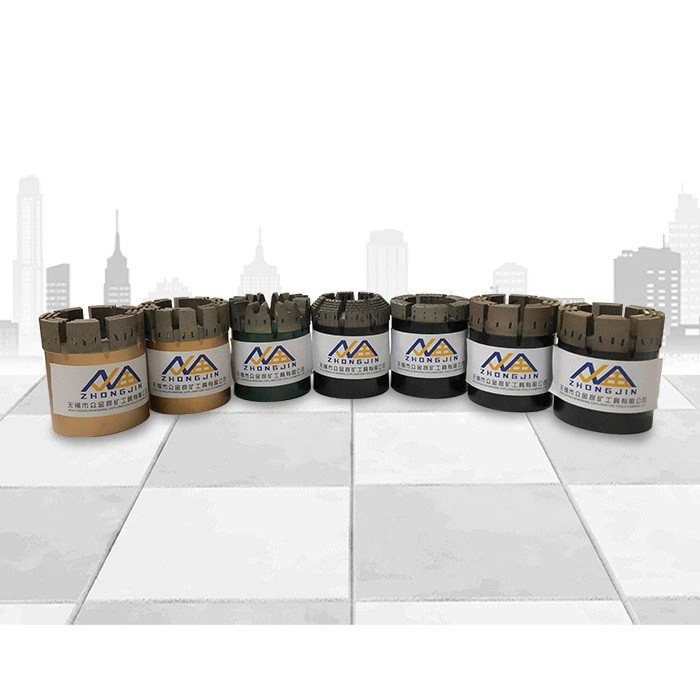
PDC core drill bits, as the name suggests, are made of polycrystalline diamond compacts. A PDC is a layer of synthetic diamond that is bonded to a tungsten carbide substrate under high pressure and high temperature. These PDC cutters are then attached to the bit body. The PDC Core Bit has a distinct structure where the PDC cutters are strategically placed on the bit face to optimize cutting efficiency.
2. Cutting Mechanism
The cutting mechanism of diamond core drill bits is based on abrasion. In surface set diamond bits, the exposed diamonds grind against the rock, chipping away small pieces of the formation. For impregnated diamond core bits, the diamonds within the matrix abrade the rock as the matrix wears. This process is relatively slow but effective for hard and abrasive rock formations.
PDC core drill bits operate on a shearing mechanism. The sharp edges of the PDC cutters slice through the rock, breaking it into larger chips. This shearing action allows PDC core drill bits to achieve higher penetration rates compared to diamond core drill bits in many cases. The efficiency of the shearing mechanism depends on the proper design of the PDC cutters and their placement on the bit face.
3. Drilling Performance
3.1 Penetration Rate
In general, PDC core drill bits offer higher penetration rates than diamond core drill bits, especially in soft to medium - hard rock formations. The shearing action of PDC cutters enables them to quickly remove material from the borehole. For example, in sedimentary rocks such as sandstone and shale, PDC core drill bits can drill at speeds that are several times faster than diamond core drill bits. However, in extremely hard and abrasive rocks, the penetration rate of PDC core drill bits may decrease significantly, and diamond core drill bits may perform better.
3.2 Bit Life
Bit life is an important factor in drilling operations, as it directly affects the cost of the project. Diamond core drill bits, especially impregnated ones, have a relatively long bit life in hard and abrasive formations. The continuous exposure of new diamonds as the matrix wears ensures that the cutting ability is maintained over a long period. PDC core drill bits, while offering high penetration rates, may have a shorter bit life in highly abrasive rocks. The PDC cutters can wear out quickly due to the abrasion, which may require more frequent bit changes.
3.3 Core Quality
Both PDC core drill bits and diamond core drill bits can produce high - quality cores. However, diamond core drill bits are often preferred when the core quality is of utmost importance. The abrasion - based cutting mechanism of diamond core drill bits causes less damage to the core, resulting in more intact and representative core samples. PDC core drill bits, with their shearing action, may cause some fracturing or damage to the core in certain rock formations, especially if the drilling parameters are not properly adjusted.
4. Cost - effectiveness
The cost - effectiveness of a drill bit depends on various factors, including the purchase price, bit life, and penetration rate. PDC core drill bits generally have a higher initial purchase price compared to diamond core drill bits. However, their high penetration rates can offset the initial cost in some cases. In soft to medium - hard rock formations where PDC core drill bits can drill quickly, the overall cost per foot of drilling may be lower.
Diamond core drill bits, with their longer bit life in hard and abrasive rocks, may be more cost - effective in such formations. Although the penetration rate is slower, the reduced frequency of bit changes can save on replacement costs. Additionally, if high - quality cores are required, the cost of obtaining accurate core samples with diamond core drill bits may be justified.
5. Application Scope
Diamond core drill bits are well - suited for hard and abrasive rock formations, such as granite, quartzite, and some types of metamorphic rocks. They are also commonly used in mineral exploration where high - quality core samples are needed for analysis. Surface set diamond bits are often used for shallower drilling, while impregnated diamond core bits are more suitable for deeper and more challenging drilling operations.
PDC core drill bits are ideal for soft to medium - hard rock formations, including sedimentary rocks, coal seams, and some types of limestone. They are widely used in oil and gas exploration, geothermal drilling, and water well drilling, where high penetration rates are crucial to reduce drilling time and cost.
6. Maintenance and Handling
Diamond core drill bits require careful handling to prevent damage to the diamonds. During storage and transportation, they should be protected from impact and excessive vibration. When using diamond core drill bits, proper drilling parameters such as weight on bit, rotation speed, and flushing rate need to be maintained to ensure optimal performance.
PDC core drill bits also need to be handled with care. The PDC cutters are brittle and can be easily damaged if subjected to high - impact forces. Additionally, the bit should be inspected regularly for wear and damage. If a PDC cutter is damaged, it may need to be replaced to maintain the cutting efficiency of the bit.
Conclusion
In conclusion, both PDC core drill bits and diamond core drill bits have their own advantages and disadvantages. The choice between them depends on several factors, including the rock formation, the required penetration rate, the desired core quality, and the overall cost - effectiveness of the drilling project. As a PDC Core Drill Bits supplier, I understand the importance of providing the right drill bit for each specific application.

If you are involved in a drilling project and are unsure which type of drill bit is best for your needs, I encourage you to reach out for a detailed consultation. We can analyze your project requirements, including the rock type, drilling depth, and other relevant factors, and recommend the most suitable drill bit. Whether you need a PDC core drill bit for high - speed drilling in soft to medium - hard rocks or a diamond core drill bit for hard and abrasive formations, we have the expertise and products to meet your needs. Contact us today to discuss your drilling requirements and start a successful partnership.
References
- "Drilling Engineering Handbook" by John P. Nygaard
- "Rock Mechanics for Drilling Engineers" by William A. Hustrulid and Richard K. Bullock
- Industry reports on drill bit technology and performance from leading drilling equipment manufacturers.