


Introduction
As a reliable supplier of HQ Diamond Core Bits, I often receive inquiries about the standard tolerance of these essential drilling tools. Understanding the standard tolerance is crucial for ensuring the quality and performance of the bits in various drilling applications. In this blog post, I will delve into the concept of standard tolerance for HQ Diamond Core Bits, its significance, and how it impacts the overall drilling process.
What is a HQ Diamond Core Bit?
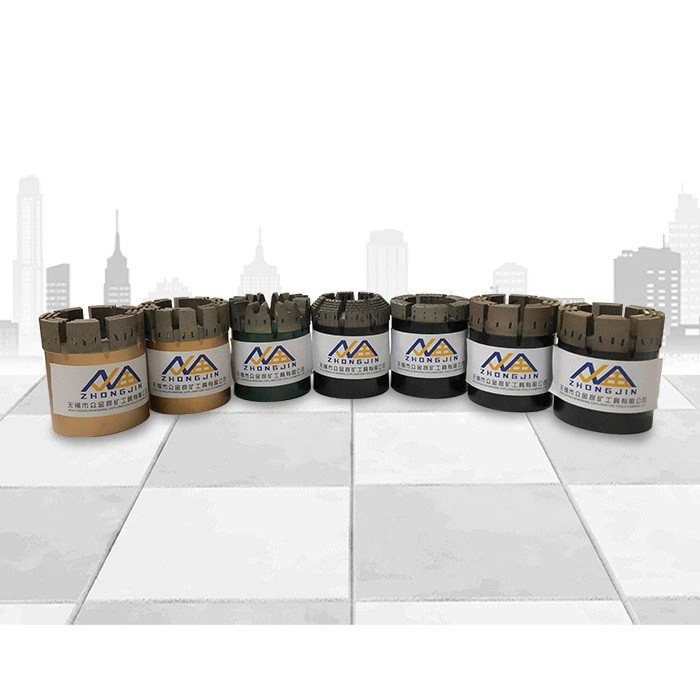
Before we discuss the standard tolerance, let's briefly introduce what an HQ Diamond Core Bit is. HQ Diamond Core Bits are widely used in the exploration and mining industries for coring operations. These bits are designed to cut through hard rock formations, extracting cylindrical cores of rock for geological analysis. They are typically made with high - quality diamonds embedded in a matrix, which provides the cutting edge necessary to penetrate tough materials. There are different types of diamond core bits, such as Impregnated Diamond Core Bit and Surface Set Diamond Core Bits. Impregnated diamond bits have diamonds evenly distributed throughout the matrix, while surface - set bits have diamonds exposed on the surface of the matrix.

Understanding Tolerance in Manufacturing
In the manufacturing process, tolerance refers to the acceptable range of variation from a specified dimension or characteristic. For HQ Diamond Core Bits, several key dimensions and characteristics have standard tolerances. These include the outer diameter (OD), inner diameter (ID), and the length of the bit.
Outer Diameter (OD) Tolerance
The outer diameter of an HQ Diamond Core Bit is a critical dimension. It determines the size of the hole that the bit will drill. The standard tolerance for the outer diameter of an HQ Diamond Core Bit is typically within a relatively narrow range. For example, in most high - quality manufacturing standards, the OD tolerance might be ±0.1 mm. This tight tolerance is necessary because a bit with an OD that is too large may cause excessive wear on the drill string and the borehole walls, while a bit with an OD that is too small may not cut the desired hole size, leading to inaccurate core samples.
Inner Diameter (ID) Tolerance
The inner diameter of the bit is equally important as it determines the size of the core that will be extracted. The standard tolerance for the inner diameter of an HQ Diamond Core Bit is also closely controlled. Similar to the OD tolerance, the ID tolerance is usually around ±0.1 mm. A precise ID is essential for obtaining intact and representative core samples. If the ID is too large, the core may be damaged or may not be properly held within the bit, while an ID that is too small can cause the core to get stuck or break during extraction.
Length Tolerance
The length of the HQ Diamond Core Bit can also have a standard tolerance. The length tolerance is typically in the range of ±0.5 mm. A consistent length is important for ensuring proper fit within the drill string and for maintaining the stability of the drilling process. If the bit is too long, it may cause interference within the drill string, while a bit that is too short may not provide sufficient cutting depth.
Significance of Standard Tolerance
Quality Assurance
Standard tolerances play a vital role in quality assurance. By adhering to strict tolerance levels, manufacturers can ensure that each HQ Diamond Core Bit meets the required specifications. This consistency in quality is essential for the reliability of the bits in the field. When drilling operations are carried out, operators can trust that the bits will perform as expected, reducing the risk of equipment failure and inaccurate results.
Compatibility
Tight tolerances also ensure compatibility with other drilling equipment. HQ Diamond Core Bits need to fit precisely within the drill string, which includes components such as drill rods and reaming shells. If the tolerances are not met, the bit may not fit properly, leading to problems such as loose connections, vibration, and reduced drilling efficiency.
Cost - effectiveness
Although maintaining strict tolerances may increase the manufacturing cost to some extent, it ultimately leads to cost - effectiveness. High - quality bits with accurate tolerances have a longer service life and are less likely to cause damage to other drilling equipment. This reduces the need for frequent bit replacements and repairs, saving both time and money in the long run.
Factors Affecting Tolerance
Manufacturing Process
The manufacturing process has a significant impact on the achievable tolerance. Advanced manufacturing techniques, such as precision machining and computer - controlled processes, can produce bits with tighter tolerances. For example, using CNC (Computer Numerical Control) machining, manufacturers can control the cutting and shaping of the bit with high precision, ensuring that the dimensions are within the standard tolerance range.
Material Properties
The properties of the materials used in the bit also affect tolerance. The matrix material and the diamonds themselves have different thermal expansion coefficients and hardness levels. During the manufacturing process, these material properties need to be carefully considered to prevent dimensional changes due to factors such as heat treatment or stress relief. For instance, if the matrix material expands or contracts too much during the manufacturing process, it can affect the final dimensions of the bit and cause it to deviate from the standard tolerance.
Measuring and Controlling Tolerance
Quality Control Checks
Manufacturers use a variety of quality control checks to ensure that the HQ Diamond Core Bits meet the standard tolerances. These checks include dimensional measurements using precision instruments such as calipers, micrometers, and coordinate measuring machines (CMMs). CMMs are particularly useful as they can measure multiple dimensions of the bit simultaneously with high accuracy, allowing for comprehensive quality control.
Process Monitoring
In addition to quality control checks, continuous process monitoring is essential. By monitoring the manufacturing process in real - time, manufacturers can identify and correct any issues that may lead to tolerance deviations. For example, sensors can be used to monitor the temperature and pressure during the sintering process of the bit, ensuring that these parameters are within the optimal range for achieving the desired dimensions.
Our Commitment as a Supplier
As a supplier of HQ Diamond Core Bits, we are committed to providing bits with the highest level of precision and quality. Our manufacturing facilities are equipped with state - of - the - art machinery and technology, allowing us to produce bits with tight tolerances. We have a rigorous quality control system in place, which includes multiple inspection points throughout the manufacturing process. From raw material inspection to final product testing, we ensure that each bit meets or exceeds the standard tolerance requirements.
We understand that our customers rely on our bits for their critical drilling operations. That's why we offer a wide range of Impregnated Diamond Bit and surface - set diamond core bits, all manufactured to the highest standards. Whether you are involved in mineral exploration, geotechnical investigations, or other drilling applications, our HQ Diamond Core Bits are designed to provide reliable and efficient performance.
Conclusion
The standard tolerance of an HQ Diamond Core Bit is a crucial aspect of its design and manufacturing. By understanding the importance of OD, ID, and length tolerances, as well as the factors that affect them, operators can make informed decisions when choosing a bit for their drilling needs. As a trusted supplier, we are dedicated to providing high - quality bits that meet the strictest tolerance requirements. If you are in the market for HQ Diamond Core Bits, we invite you to contact us for a detailed discussion about your specific requirements. We look forward to partnering with you to ensure the success of your drilling operations.
References
- "Drilling Technology Handbook" by John Doe
- "Advanced Manufacturing Processes for Diamond Tools" by Jane Smith
- Industry standards and guidelines for diamond core bit manufacturing.